
By Avery Stempel, Medicinal Mushrooms Committee
Article from The Mycophile Quarterly, April, May, June 2026
“Every life comes to an end, when time demands it. A loss of life is to be mourned, but only if the life were wasted…”
Time-traveling Dr. Spock in Star Trek, the Animated Series, Season 1, Episode 2
It was quiet, too quiet, as I ascended the stairs. The previous night he had asked me to go to the store for him. He was looking very rough when I dropped off his supplies but he denied my efforts at persuading him to get medical attention. I left him at his insistence and told him I’d check in in the morning. I had felt an inkling while I was out running errands; he wasn’t answering any of my texts or calls. Now I knew: he was gone. I opened the door to his apartment. The lights were off, his bed disheveled but empty. I scanned his home, listening, hoping for some noise, some sign, but heard nothing. I turned to the living room and there, on the couch, head in hand, he sat. Still, slumped, peaceful, dead. It is a memory that haunts me. Could I have done more, should I have done more? He was seeking peace; would prolonging his life only have continued his suffering?
The inevitability of death hangs like a shadow over us. An unforgiving pall that we attempt to disregard as we navigate our day-to-day lives. A sheer shroud draped over our shoulders. It darkens with age, snags on experiences, rips when we least expect it. Navigating the transitions during end-of-life care for our loved ones is difficult at best. Rife with trials and challenges, emotionally charged conversations and immediate, impactful decision making. During these times there aren’t enough tools in the toolbox for the person whose faculties are failing, nor for the circle of friends and family who are working through the details and making the hard choices. The mind-altering effects of psilocybin-containing mushrooms have proven useful in these moments. There is mounting research on how impactful these mushrooms can be for those directly transitioning from life to death. It can also be a powerful tool for others in the circle of grief as well.* In this article I have gathered examples showing how this tool has helped people directly engaged in end-of-life care.
*Please see footnotes 1 through 10.
The FDA has acknowledged psilocybin as a breakthrough therapy. With the 2018 Right to Try Act, it should be legally allowed for terminally ill patients. However, the Drug Enforcement Agency (DEA) continues to block access. The push to bring psilocybin treatments to patients in palliative care and hospice programs in the United States is gaining traction among physicians specializing in end-of-life conditions (note 11). As a result, attorneys are now starting to push the DEA for approval. Attorney Kathryn Tucker has spent years fighting for the rights of terminally ill patients. Lucid News reporter Christine Redick interviewed her in November of 2025 for an article detailing this fight. Ms. Redick quotes Tucker as saying “This multipronged, multidimensional advocacy has all been driving toward one objective: allowing expert clinicians to access psilocybin to relieve debilitating anxiety and depression in patients who are dying of cancer. This care should be fully integrated into the medical treatment of people with advanced illness.” Many doctors, researchers and facilitators involved in studying the effects of psilocybin-containing mushrooms and integrating the experiences of patients who have engaged with them agree that the profoundly impactful results of consuming these substances can vastly improve the outlook of people diagnosed with terminal illnesses (note 12).
Dr. Sunil Kumar Aggarwal is one doctor working at the forefront of using substances that promote neural plasticity during end-of-life transitions. A brief biography from Dr. Aggarwal: “I am a hospice and palliative medicine and physical medicine and rehabilitation physician and medical geographer. My primary clinical work is as an Integrative Pain, Palliative Care, and Rehabilitation Physician in private practice at AIMS Institute (Seattle, WA) and as an on-call Palliative Physician and Hospice Physician in a Puget Sound-based healthcare system. I previously ran the palliative care medicine consultation service at a community hospital and regional cancer center. My medical geographic scholarship interests are in geographies of access, delivery and development of cannabinologic and psychedelic integrative medicine, especially as they pertain to development in pain management, hospice and palliative medicine and rehabilitation services.”
At a talk with the group New Yorkers for Mental Health Alternatives (NYMHA), Dr. Aggarwal discussed the impact psilocybin-containing mushrooms can have for people who know that the time of their departure is quickly approaching:
“… people who are dying oftentimes are racked with untreatable or poorly managed dread, existential anxiety, fear of dying. It can lead to a lot of unrelieved suffering, difficulty being with loved ones… enjoying whatever time they might have left, even severe physical pain… So if you can treat that kind of anxiety with a therapy that really changes how you think about death and dying and your own mortality, in a few hours, with preparation, with integration, with support, with the right safeguards, with the right set and setting, and that leads to a better life quality with the time they have left, it is equivalent to saving their lives… When you deal with people who don’t have much time left to live and you do something to boost their life quality, you are saving their lives because that’s all you can do for them…”
Dr. Aggarwal’s full presentation is available by clicking here.

Julie Netherland is a medical sociologist from the United States who works in drug policy. At 55 years old she was diagnosed with metastatic breast cancer (MBC), a treatable but not curable condition. Most patients with this kind of cancer rarely survive more than five years from diagnosis. While she had concerns about models of regulation and access, she heard about the life-affirming impact that a psilocybin-containing mushroom experience can have for someone diagnosed with a terminal illness. She sought a means for securing a safe experience under the care of trained professionals. She described her experience to me:
“Faced with this diagnosis and knowing that death was probably coming for me sooner rather than later, I enrolled in a trial at NYU to study the impact of psilocybin on people living with advanced (terminal) cancer. The trial was carefully crafted and included several therapy sessions with skilled practitioners who helped me clarify my goals and intentions but also helped me talk through what it is like to confront the likelihood of a premature death. By the time I was given the medicine, I was ready to approach death with curiosity and playfulness. There are no words to explain what happened that day, but I can say that it was one of the most meaningful experiences of my life. I accessed profound grief as well as joy, and I left the experience with a number of deep insights into how to differently approach being treated for a terminal illness that eased a lot of the anxiety I had been carrying. Most importantly, I left behind any fear of death I might have had. The session I had was over two years ago and while the details of the experience have begun to fade, my fearlessness about death has not. I can think of no greater gift than to be able to spend whatever time I have left focusing on the present and not fearing what is to come. It was truly life-altering in helping me come to terms with a terminal illness.”
Experiences with psilocybin-containing mushrooms have been slightly more accessible through professionally trained and certified medical practices in both Canada and Mexico.
Dr. Linda Carlson is a clinical health psychologist in Canada fighting for legal psilocybin access. She is also the Enbridge Research chair in Psychosocial Oncology. Dr Carlson was awarded a breakthrough therapy grant through the Canadian Cancer Society in order to expand the ease of access for patients with advanced-stage cancer conditions. Currently, psilocybin-containing mushrooms are illegal at the Canadian federal level but Health Canada has established 3 different pathways for access: individuals can enroll in clinical trials, can apply for an individual exemption through “subsection 56(1)” or practitioners who have been approved through the Special Access Program can facilitate psilocybin consumption. While these options exist, they often take too long to get approval for people in advanced stages of cancer to glean any benefit. Dr. Carlson and her team are working to streamline access by creating a network of doctors, clinicians, healthcare providers, policymakers and patients who understand the need for immediacy in situations that involve end-of-life care and quality of life.
John Gilchrist, TheraPsil director of communications, took some time to chat with me about efforts to legalize psychedelic substances. Founded in 2019 in British Columbia, TheraPsil is focused on ensuring that safe, regulated access is available to all Canadians where doctors and patients are allowed to determine care routines. TheraPsil has already trained over 900 practitioners from around the world. For their first class of 19 clinicians, Health Canada granted subsection 56 exemptions to each participant so that they could consume psilocybin-containing mushrooms under supervision in order to facilitate understanding of what patients would be going through.
Gilchrist brought a few impactful statistics to my attention. First, the 2023 Health Canada substance use survey, which showed a 195% increase in illegal psychedelic substance use over the previous survey. The other number that was vastly profound is that 82% of people surveyed in 2021 support legal access to psilocybin-containing mushrooms during end-of-life care. While TheraPsil is working to create broader access, its team acknowledges that treatment for advanced cancer patients can be a critical component of a patient’s quality of life.
We discussed Pete Pearson’s struggle to access psilocybin therapy legally. Pearson was diagnosed with a terminal lung disease. He applied for access through both the Special Access Program and a subsection 56 exemption and waited nearly a year for a decision. Both applications were denied. Health Canada stated they could not determine if he was at the end-of-life and suggested a clinical trial, despite acknowledging his disease was terminal. He was later approved for Medical Assistance in Dying (MAiD), effectively too sick to live but not sick enough to try psilocybin. Gilchrist pointed out that patients in palliative care do not experience suffering on a research timeline.
In Mexico, psilocybin-containing mushroom use is approved for ceremonial purposes. There are clinical retreats offering services that immerse patients in transformational experiences through a ceremonial context for a variety of reasons. End-of-Life anxiety and existential distress are two of the conditions people often claim as their reasons for engaging with these substances. Places like PRATI (the Psychedelic Research and Training Institute) in Tijuana offer courses for certified clinicians and facilitators and help guests seeking to work with psilocybin-containing mushrooms as a tool to facilitate their healing.

We all fear the unknown, shrinking away from things that cause us pain, avoiding situations that cause us sorrow. As the time to transition draws closer, anxiety, stress, fear and panic can start to set in. Most people do not know their exact end point. For some, the train’s departure is apparent. They sit on the bench at the station and can hear it approaching. Friends and family stand by wishing them well, holding their hand, pleading that they have an easy journey. Death is inevitable. It comes for us all. Not only are the ones departing experiencing the challenges of its impending arrival but so too are the ones left behind.
The 2023 Indie Documentary DOSED follows the story of Laurie Brooks, mother of 4, with an advanced stage cancer diagnosis. You can watch it by donation here. It is another beautiful example detailing the use of psilocybin-containing mushrooms as an aide in processing the difficulties encountered during end-of-life care.
Resources for friends and family of those who are in end-of-life care are often limited to pamphlets, videos or brief counseling sessions. Coping with impending loss, the difficulty of engaging in constructive dialogue and the challenges of creating the best environment for a person that is transitioning from life are not easy hurdles. As we navigate the sunset of someone we hold dear, every decision we encounter can feel onerous—impossible, even—and hugely impactful. Conversations are awkward, words and concepts seem inefficient and unclear.
Corinne Carey, a longtime end-of-life advocate, has been fully immersed in the lives of terminally ill patients for over a decade as she has fought for right-to-die bills in New York and New Jersey. As her own mother began to require increasingly more care, their conversations about how to move forward proved difficult and fruitless. Trying to get her mother to see how her declining health was impacting her independence and that she would need additional assistance appeared futile. After her mother experienced some difficult care emergencies, Carey pleaded with her to consider a supported-living situation. For days, their conversations went nowhere. In exasperation, Carey decided to try a novel tactic: she consumed a low dose of psilocybin-containing mushrooms. The clarity and insights she experienced allowed her to let go of the thought that she could fully control future decisions. She released the idea that she could change her mother’s mind. One of her key mental changes was embracing the concept that the only thing under her control was how she could react to the situation. She partially attributes her success in facilitating her acceptance of her mother’s condition to that low dose of fungi.
Everyone wrestles with grief. Everyone struggles to understand loss. In today’s nonstop world, it can be very difficult to set aside the time to navigate the murky depths of pain, distress and death. In three months of late 2024, I was washed with wave upon wave of endings and deaths. My father-in-law passed suddenly, one of my closest friends (and tenant) passed unexpectedly, I learned the building I operated my business out of had been sold, one of my most critical employees resigned, my car broke down, my home of 11 years was put up for sale, and my dog died. So many losses. So many fragments of myself had been chipped away. So many layers of identity completely stripped. The weight of all these changes in such rapid succession was incredible. Processing them while moving my business, moving my home, figuring out a new vehicle and grieving was impossible.

Finally, in late summer of 2025 I set a few days aside for a solo camping trip. I set up my tent, gathered my things and lit my campfire. I had prepared a moderate dose of psilocybin-containing mushrooms to facilitate the evening’s letting-go. As I watched the flickering fingers of the fire dance along the burning wood, turning papers and cardboard into char, the weight of all those burdens moved into the flame and danced along with the snap and crackle of the fire. Everything I had been carrying lifted, eased, traveled with the smoke through the branches above me to the stars. I watched as the fire slowly converted into sparkling embers, then began to wink entirely into darkness. I breathed my losses into the emptiness of the dying blaze and felt myself float in a way I had not been able to achieve over the previous year. After fully extinguishing the remaining embers with water and listening to the hiss and spit as the evening died, a relieved smile pulled itself across my face. I slept so soundly that night.

We all endure an amount of pain, of suffering. Some wrap the scars wholly around themselves and embody it. Some push the resulting dead tissue deep into the nooks and crannies of their subconscious. I realize that the path my friend had walked was one that brought him close to the edge. The baggage he carried was too heavy, too burdensome to allow him to continue. What he was doing that final night we shared a few breaths was telling me he was leaving. His end was close and he knew it. He needed me to take care of his cats, distribute his things, tell his sister, tell our friends. I have gotten so twisted up by all the could-haves and the should-haves but the fact remains that I didn’t take action to save him. I did what he asked and nothing more.
Death is a process that everyone encounters. Attempts to understand its necessity, its unfolding and its impact have appeared in art, literature and religion across cultures for as long as humans have created. Accepting the inevitability of the end, the occasional shocking suddenness of its appearance or the permanence of its effect is never easy. The use of psilocybin-containing mushrooms during these times has proven to be a very powerfully effective tool.
“I need not describe the feelings of those whose dearest ties are rent by that most irreparable evil, the void that presents itself to the soul, and the despair that is exhibited on the countenance. It is so long before the mind can persuade itself that she, whom we saw every day, and whose very existence appeared a part of our own, can have departed for ever—that the brightness of a beloved eye can have been extinguished, and the sound of a voice so familiar, and dear to the ear can be hushed, never more to be heard.”
Mary Shelley, 1818, Frankenstein
The opinions and conclusions contained in this article express the viewpoint of the author and interview subjects and do not necessarily represent those of the North American Mycological Association.
References
- Khan F, Pandupuspitasari N, Tencomnao T, Chuchawankul S. “Breaking the chains of depression: A systematic review and meta-analysis of psilocybin therapy.” Journal of Affective Disorders. 2026; Volume 397. View source.
- Konstantinou G, Rosenblat J, Hales S, Husain M, Blumberger D. “Psilocybin in Late-Life Mental Health: Addressing Depression, Loneliness, and Existential Anxiety.” General Hospital Psychiatry, Volume 98, January–February 2026, Pages 54–63. View source.
- Kratina S, Strike C, Schwartz R, Nayfeh A, Jopling S, Lo C, Rush B. “A scoping review of variations in psychedelic interventions for psychological suffering associated with the end of life.” Social Science & Medicine, Volume 390, 2026, 118536, ISSN 0277-9536. View source.
- Moshfeghinia R, Mostafavi S, Jazi K, et al. “The effects of psilocybin on psychological distress in cancer patients: a systematic review and meta-analysis.” BMC Psychology 14, 149 (2026). https://doi.org/10.1186/s40359-025-03935-y.
- Matos ARS, Silva AC, Rego L, Fernandes R, Gonçalves S. “Psilocybin-assisted therapy for individuals with palliative care needs: A systematic review of safety and efficacy.” Palliative Medicine. Dec. 18, 2025;40(1):7–20. https://doi.org/10.1177/02692163251383335.
- Downar J, Lapenskie J, Anderson K, Parsons G, Polskaia N, Lalumiere G, Lawlor P. “Psilocybin for psYCHological and existential distress in PALliative care (PSYCHED-PAL): A single arm unblinded clinical trial.” Palliative Medicine. Jan. 30, 2026. View source.
- Martinez M. “Psychedelics May Lessen the Fear of Death and Dying, Similar to Feelings Reported by those who’ve had Near Death Experiences.” Johns Hopkins Medicine Newsroom. August 24, 2022. View source.
- Yu C, Yang F, Yang S, Tseng P, Stubbs B, Yeh T, Hsu C, Li D, Liang C. “Psilocybin for End-of-Life Anxiety Symptoms: A Systematic Review and Meta-Analysis.” Psychiatry Investigations. 2021 Oct 8;18(10):958–967. View source.
- Whinkin E, Opalka M, Watters C, et al. “Psilocybin in Palliative Care: An Update.” Current Geriatrics Reports 12, 50–59 (2023). https://doi.org/10.1007/s13670-023-00383-7.
- Ross S, Bossis A, Guss J, et al. “Rapid and sustained symptom reduction following psilocybin treatment for anxiety and depression in patients with life-threatening cancer: a randomized controlled trial.” Journal of Psychopharmacology. 2016;30(12):1165–1180. https://doi.org/10.1177/0269881116675512.
- Mulcahy L. “Facing Death Without Fear: Psychedelics for End-of-Life Care.” WebMD Archive Article. December 15, 2022. View source.
- Gold M. “Easing End-of-Life With Shrooms: Psilocybin Evidence: Clinical Trials in Palliative, Cancer, and End of Life Care.” Psychology Today, January 1, 2026. View source.
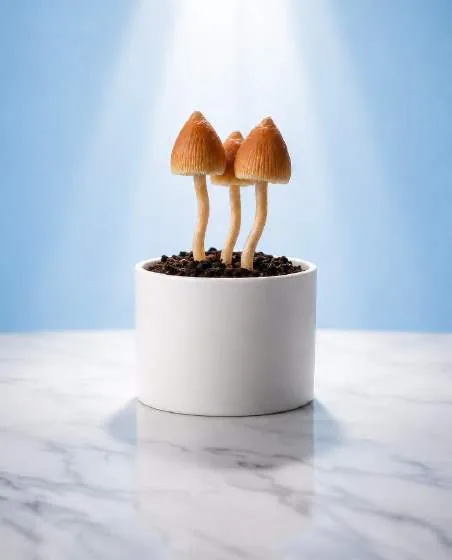
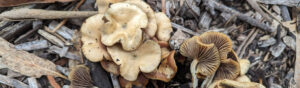
Psilocybe cyanescens (wavy caps). Photo by eli/ettijay via iNaturalist and Wikimedia Commons. CC0 1.0. Cropped for presentation.

NAMA Store >