By Maya Han, Cultural Programmer for New York Mycological Society
Article from The Mycophile Quarterly, April, May, June 2026
In the riveting opening scene of the film Daughters of the Forest, two women—one a wizened centenarian and the other her granddaughter seven decades younger—sit at a rustic kitchen table brimming with a fresh harvest of mushrooms.
With a quiet determination and a quickness belying her age, the abuela Doña Julia1 identifies each in her native language, in a litany of names that feels like both a conjuring of ancestral traditions and spirits and an anchoring of her nieta into a millennia-spanning mycological lineage. The mysterious sounds of Pjiekakjoo are translated onscreen: penny bun, morel, black elfin saddle, white elfin saddle, chanterelle, funnel cap, saffron milkcap, clustered gray agaric, carmine coral and so on, in a mesmerizing commingling—and codification—of Indigenous knowledge and Western “scientific” training.

We witness in real time a schooling in the “mother tongue” and unspooling of a veritable mycological mitochondrial DNA (from ancient Greek, μίτος, or “thread”)—a matrilineal process in an intimate act interweaving cultural instruction, entrusting, bequeathing and, ultimately, preservation. We learn that the Doña Julia is one of the last remaining speakers of the nearly extinct Pjeikakjoo2—a language incomparably rich with mycological terminology and knowledge—and that these acts of translation are both Lis’s life’s work as a scientist and her race against time and cultural extinction. This powerful scene showcases the spectacular fungal diversity of this region3 and offers a privileged window into a rarely-glimpsed world, with which many North American mycophile spectators may be unfamiliar.
Centered on these two Pjiekakjoo women and a third from the Zapotec, Daughters of the Forest is the enthralling new film by Mexican director Otilia Portillo Padua. An alluring hybrid of documentary and sci-fi, this long overdue work addresses the under-represented realm of Indigenous mycologies and presents new possibilities for ecological coexistence, care and repair. It has been captivating audiences internationally, including at its New York premiere in May 2026 at the Margaret Mead Film Festival, where I was honored to present the film on behalf of the NAMA-affiliated New York Mycological Society. Portillo Padua generously took time from a whirlwind film festival tour to grant an interview, excerpted as follows:
Maya Han: Otilla, thank you so much for taking time out of your marathon schedule to share a bit about yourself and your film with the mycological community. First of all, can you tell us what the impetus was for this film? What initially inspired you to make it?
Ortilia Portillo Padua: Thank you Maya for the interview and the time. It was an essay by science fiction writer Ursula K. Le Guin called The Carrier Bag Theory of Fiction. In this essay, she redefines technology as a cultural carrier bag rather than a weapon for domination. Prior to the sword used by the Hero to kill, there was a container, a holder of stories, a bag of stars and—why not?—a basket of mushrooms!
MH: Mexico has dozens of Indigenous groups. Why did you choose these two particular groups [Zapotec and Pjiekakjoo] and these three particular characters?
OPP: Through the College of Postgraduates, we met a few students that came from different regions in Mexico. We met Juli and Lis in the process. We didn’t specifically start with a region. Juli had just finished her bachelor’s and wanted to pursue a master’s; she also had this very interesting back story with the Holy Mushroom. Lis had already founded the Hongueras Pjeikakjoo in 2016 and had documented almost 200 species of edible mushrooms. We wanted to create a fungal film that didn’t exclusively focus on one aspect of fungi but felt part of a bigger ecosystem with human and nonhuman entanglements.
Lis’s and her grandmother Julia’s story is the story of a community. Juli has a more personal story. In many ways, both stories complement each other.
MH: What was your connection to this story, if any? Did you have any particular connection to mushrooms or mycology in your life? Were you exposed to either in your childhood or family life and lore?
OPP: I don’t recall having such a clear connection to mushrooms in my past. But now they’ve become something very personal because they have taught me about connection, relationships, survival and, most importantly, how to relate to loss differently. Loss is very present in this story. In the traditional three-act structure, there is an “all is lost” moment; this normally happens about three fourths of the way into a movie. Our film follows a more mycelial structure but there is still that lingering question: what do you do with what you’ve lost or will lose? Fungi allow me to see other possibilities.
MH: What was your knowledge of mushrooms and mycology prior to embarking on this film project? What is your relationship to these fields, and/or your view of mushrooms and mycology, now? Alternatively, has working on this film impacted your view of Mexican culture, Indigenous cultures, ecology and filmmaking in any way?
OPP: I had very little knowledge of mushrooms. Six years ago, I didn’t even know what mycelium meant. The more I discover, the more fascinated I am by mushrooms and the more stories I feel can be told about them, all in different forms and shapes. That is also why the film has a secondary title, Mycelium Chronicles. I was inspired by the idea of world-building and it was important that this fungal story was just one among many more waiting to be unraveled. Fungi have now shaped how I interpret the world and the relationships in it. I think once fungi inoculate your life, there is no going back.

MH: From the film’s title to the main characters, to the filmmaking team, this film centers women. Can you tell me how much the women-centric, and the matriarchal, reflects the mycological culture in Mexico, either historically or contemporaneously? In your experience, to what extent are women central to the foraging, preparation of, study of mushrooms/fungi, either in a culinary, medicinal, shamanistic or other cultural, ecological or scientific sense?
OPP: Most of the foragers and scientists I met were women and most of the culinary preparations are done by women. So I would say women are central to the mycological culture in Mexico in the past, in the present and, very likely, in its future. I do want to mention that men also forage; a lot of the time they go to remote areas of difficult access to find very sought-after mushrooms. Foraging is a family activity.
MH: The figure of Maria Sabina looms large in the Western views and knowledge of Mexican mycology. As a Mexican, how much were you aware of her story, myth and legacy? Was it well known to you? What is your view of her?
OPP: It’s hard to express all the feelings Maria Sabina triggers. I knew about her even before I knew what mycelium meant. She is obviously legendary and changed the history of mushrooms in the world—but she also had an incredibly hard life and it’s hard not to feel like there was a betrayal of trust in her story. I always think about her when I think about reciprocity and working across different backgrounds and contexts.
MH: Can you tell me more about the Doña Julia character? Specifically, how you first learned of or heard about her?
OPP: When I first met Lis in person, she introduced me to her mother Cristina and grandmother Julia. Lis was always clear to me that she was sharing knowledge that wasn’t exclusive to her and that had been shared with her by her ancestors. She showed me her thesis, which was based on the knowledge of her two grandmothers and other community members. When I met Lis, her grandmother José passed shortly after so we didn’t have a chance to meet her, but Lis mentioned that José referred to mushrooms as her “husband” because they provided her with everything she needed to survive. As for Doña Julia, it was a gift to be able to record her final years and share part of her story with the world.
MH: There is a tremendous sense of trust between you and Doña Julia and the other characters, a testament to your skills and sensitivity as a filmmaker. Did it take much convincing on your part to get her involved or was she open to participating from the outset? What was it like to work with her on this film? Do you have any particularly stand-out moments filming with her, or any particular takeaways from that experience? Are there other figures like her throughout Mexico or was she unique? Alternatively, to what extent is she typical or representative of a type of figure in Tlahuica-Pjiekakjoo culture?
OPP: I will always be grateful to the professors at the College of Postgraduates for their generosity. Dr. Jesús Moreno kindly opened the doors to his laboratory, his networks, his colleagues and his students. Without them, I don’t think we would have gotten to establish the relationships we did. We built trust upon an already-existing trust based on years of working together among different communities.
Doña Julia was always very open about sharing her knowledge of mushrooms. She had great memory and was very intelligent and practical. Sometimes I would ask her very abstract questions and she would reply very practically. Mushrooms, above anything for her, were what her family ate when they faced scarcity and were just delicious. She would always tell us how to cook them.
Doña Julia is unique but also universal. Her knowledge about mushrooms and her language is one of a kind. She was one of the last speakers of Tlahuica-Pjiekakjoo language. She also reminds people of their own grandmother, and what their grandmothers mean for them, no matter where they come from.
MH: Can you tell me about the two leading “characters” Lis and Juli — are they largely “outliers” or are there more Indigenous people migrating over to the “Western” sciences of university studies?
OPP: I think Lis and Juli are incredibly special but they also represent a generation in the intersection of tradition and other more academic forms of knowledge. We have had an opportunity to meet more students of the College of Postgraduates from different areas, such as Botany or Earth Sciences. The more access to other forms of education, the more diversity of backgrounds of the students. All this can only enrich academia and the other way around.
MH: In your film, some of the obstacles or challenges that Lis and Juli faced in the pursuit of their work or studies are vividly depicted. However, they are portrayed as relatively supported by their families in terms of their choice of studies. Do you know if they met any resistance from their families or communities about venturing outside of the Indigenous realm and/or sharing their cultures with the “outside” world? Can you comment on the broader integration of or views of integrating Indigenous knowledge and culture with Western science? For example, to what extent are Mexican universities acknowledging or integrating or working in collaboration with these local cultures in their faculty, curricula or coursework?
OPP: It has been beautiful to see Hongueras Pjiekakjoo grow into the recognized collective it is. Lis is a respected member of her community and they support each other. They have a strong sense of communication and understanding, and the authorities have expressed strong admiration for her work. The last time we spoke with the authorities they were happy that their knowledge of fungi was being known and recognized.
I can’t comment with profound knowledge about the integration of Indigenous knowledge into Western science in academic settings—but I will say that ethnomycology is a very important academic field in the mycology circles in Mexico. Dr. Gaston Guzman was a pioneer in the field of ethnomycology. Today, there are highly respected academics with diverse backgrounds all across Mexico. One of the leading figures in the study of Boletus is Dra. Olivia Ayala, one of Juli’s mentors in the film. She is Mixe, from Oaxaca, and a brilliant academic and researcher. So I would say that the College of Postgraduates has done a lot of work to bridge diverse forms of knowledge.
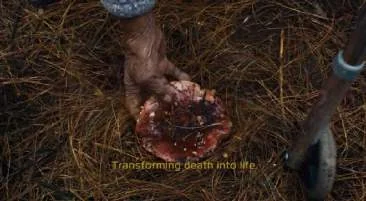
MH: Alternatively, have you noticed differences in the approach to mushrooms/fungi and mycology in the Pjiekakjoo and/or Zapotec cultures vs. Western “scientific” approaches and can you elaborate in terms of the process of foraging or engaging in a foray, preparation of mushrooms, cultural attitudes towards mushrooms, uses of, etc.?
OPP: This is a hard question for me to answer, because I don’t think I have enough understanding of either method, but I’ve been told anecdotally that the Holy Mushroom doesn’t like it when you cut it in pieces even when it’s for taxonomic or research purposes.
MH: Fascinating! This one is more an observation rather than a question: One of the many compelling themes of the film is not just that of knowledge, but different forms of knowledge and knowing. The characters mention, “If you don’t know your forest, you won’t know how to care of it” and later, “Nobody can love what they don’t know.” I want to applaud you on addressing those nuances. I often lament the West’s privileging of scientific “rational” knowledge as the only valid, or the superior, form of “knowing.” I am reminded of the etymology of the word, from the Old English cnāwan, Latin gnoscere, to the Proto-Indo-European root * neh₃- , all containing a rich, full sense of knowledge in all its amplitude—including possibly the more intuitive, inchoate, “feminine” ways of knowing—its “preceding,” “embryonic” acts of recognizing, “seeing” or “acknowledging” something into existence—as well as our more contemporary understanding of knowledge as the “concluding” or “conclusive,” reified, “validated” scientific, factual or empirical data, which is just really only one type of knowledge.
OPP: Thank you for sharing this. You know this reminds of how some female writers, Afrofuturists and Indigenous writers approach sci-fi. It’s sci-fi based on other forms of knowledge, not only technology, hard sciences, empirical data or the scientific method. Ursula K. Leguin wrote sci-fi inspired by intuition, empathy, subjective truth and anthropology. Rather than conquering the unknown, there is a sense in her work of putting value on community and preservation as human achievements.
MH: Do you think mycological culture is unique or special or distinctive in Mexico vs. other countries or cultures? If so, in what ways?
OPP: The more I have found about mushrooms, the more I have discovered about multiple mycological cultures around the world. Some countries and cultures have ancient ties to mushrooms and some are more recent. Many cultures approach the fungal world from many different perspectives. A few years ago, Fungi Foundation founder Giuliana Furci mentioned in a lecture she gave to a group of enthusiasts that Mexico was a mushroom. I really was inspired by that notion.
MH: In the film we see Doña Julia as the emblem of Indigenous cultures in peril and at risk of extinction. For obvious reasons and ways, it mirrors the larger perils of extinction in the biological/ecological world, and often feels like a race against time and a daunting if not hopeless task. What is your view on ethnomycological (and, by extension, ethnobotanical and larger ethnocultural) preservation, if any?
OPP: I think it’s crucial, and very related to your comment about appreciating and giving equal importance to other systems of knowledge, and about protecting through knowledge. I see Lis and her collaborators as true visionaries, given the impact they’ve had with Hongueras Pjeikakjoo over the last 10 years, working with what they have: the mushrooms they and their ancestors knew so well. Through small, local and collective actions, they changed many aspects of their community and territory. For decades, their community has fought against deforestation; now the fungi has also become a part of their resistance. By identifying and naming all the 200 mushrooms, they also saved knowledge about their forest and culture from getting lost.
MH: Have Lis and Juli seen this film, and/or have you screened this film in their communities? If so, can you tell me a bit about what the reaction or reception has been?
OPP: We haven’t yet, but we’re planning to as part of the impact campaign. We’re still in conversation with the authorities in both San Juan Atzingo and Lomas de Teocalztingo in terms of timing.

MH: What kind of impact do you hope to have with your film? What would you like viewers of all North American identities to take away from your film?
OPP: Most of our ideas for impact are based in Mexico, as we think there is a lot of work to be done locally and for the foraging communities that are the heart of film. We also think there is lots of potential in terms of bridging Indigenous knowledge and science, language preservation, women-led stewardship of the land, mycelial networks and the fight to honor ancestral ways of life in a rapidly changing world. All of these issues have a certain replicability in many different contexts around the world.
For more information about the director, the featured mycologist and the film, please visit daughtersoftheforestfilm.com. For more information about one of the Indigenous groups featured in the film, visit @hongueras_pjiekakjoo.
Notes
- The revered Pjiekakjoo Honguera Doña Julia passed away in 2024 before the release of Daughters of the Forest. She was 103 years of age.
- Pjiekakjoo (also commonly known as Tlahuica or Ocuilteco) is a critically endangered Indigenous Mexican language with fewer than 50 remaining fluent speakers, all of whom are elderly.
- Known for its astonishing fungal diversity, with approximately 500 species of edible wild mushrooms, Mexico is second globally only to China in fungal consumption. The Tlahuica-Pjiekakjoo people of central Mexico officially recognize and harvest 202 species of wild edible fungi, marking this ethnic group as possessing the largest ethnomycological heritage in the world. Mexico includes 71 distinct Indigenous groups, each with their own mycocultural heritages, including the Zapotec who officially recognize up to 80 native edible fungal species.
About Maya Han
Maya Han is the Cultural Programmer of the New York Mycological Society. She is a Brooklyn, NY-based mycophile, artist, filmmaker and writer who holds a hand lens to hidden histories. Her latest film is Black and Brown: The New My(e)cologies.
Contact: [email protected] or [email protected]
NAMA Store >