Mushroom foraging combines exploration, observation and discovery. A walk that might once have been simply a hike can become a search through dozens of tiny habitats, each with its own fungal inhabitants.
Responsible foraging, however, is about more than filling a basket.
Forage Responsibly and Protect Fungal Habitats
Before collecting mushrooms, learn the rules for the land you are visiting. Parks, forests, preserves and other public lands may have different regulations regarding mushroom collection. Some prohibit collecting completely, while others allow limited personal harvesting.
When collection is permitted, take only what you need. Many mushrooms are valuable not because they are edible, but because they provide habitat, reproduce, interact with other organisms or simply form part of the ecosystem.
Observe, Identify and Learn Safely
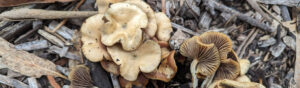
Good field observation is just as important as collecting. Record where the mushroom was found, what it was growing on and which plants or trees were nearby. Photographs of the mushroom in its natural habitat can often teach you more than a basket of unidentified specimens later at home.
If you do collect a specimen for identification, try to remove the entire mushroom carefully rather than breaking off only the cap. Important identifying characteristics may occur at the base of the stem.
And remember one essential rule: never eat a wild mushroom unless its identification and edibility have been reliably established. Similar-looking mushrooms can have very different consequences when eaten.
Joining an organized mushroom walk or foray is one of the safest and most rewarding ways to learn. Experienced identifiers can point out characteristics that are easily overlooked in photographs or field guides.
NAMA advocates sustainable mushroom use and responsible collecting practices that do not damage fungi or their habitats. The goal is not simply to find mushrooms—it is to become a better observer and steward of the places where they grow.
NAMA Store >