Finding an interesting mushroom in the forest can be exciting. But what if that discovery could still be useful to scientists decades from now?
That is the idea behind a voucher specimen.
A voucher is a carefully documented physical specimen preserved as a permanent scientific record. In mycology, the process generally begins in the field.
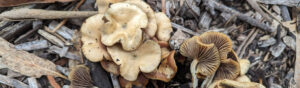
Collectors record important information such as the location, habitat, substrate and surrounding vegetation. The specimen can then be photographed while its fresh characteristics—such as color, shape and texture—are still visible.
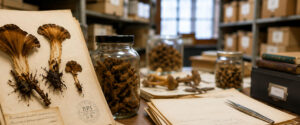
After identification and documentation, a selected specimen is dried and preserved in a scientific collection known as a fungarium or herbarium.
Why keep the physical mushroom when we already have photographs?
Because scientific questions change.
A specimen collected today may be examined years later by another researcher. Its microscopic structures can be studied. Its original identification can be reassessed as taxonomy changes. In many cases, DNA can also be extracted and compared with newly collected material.
That makes properly documented specimens much more than dried mushrooms. They become reference points in our understanding of fungal biodiversity and distribution.
NAMA’s Voucher Collection Project has been preserving material collected at NAMA forays since 1997. Voucher data, photographs and specimens contribute to a permanent collection housed at the Field Museum of Natural History.
It is a powerful example of how amateur and professional mycologists can work together.
A person walking through the woods may make the original observation. An experienced identifier may determine what the specimen appears to be. Volunteers may photograph, record and process it. Scientists can later use that material in research.
The result is community science that can continue producing knowledge long after the original mushroom has disappeared from the forest floor.
NAMA Store >